Questions and accountability
Frequently Asked Questions
Direct answers about the campaign, the record, and the work ahead.
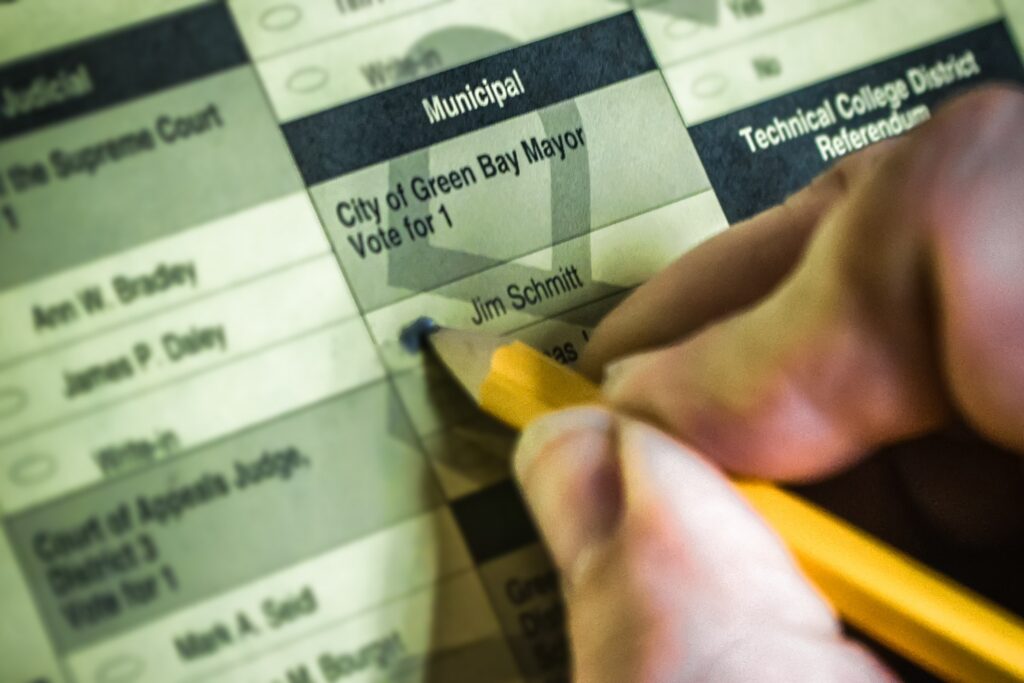
Straight answers about why Jim is running, what Green Bay needs next, and how the campaign will be held accountable.
Why is Jim running for mayor?
Green Bay has real work in front of it. Families need a more attainable path to a home. Homelessness demands a response that is both humane and effective. Neighborhoods need to feel safe and heard. Businesses, workers, and young people need to see a future here. And residents deserve a City Hall that gives clear answers and follows through.
Jim is running because those problems need more than good intentions. They need a mayor who understands how the city works, can bring the right people together, make decisions, and carry the work through. He is not asking Green Bay to relive the past. He is making the case that experience, practical plans, and accountable execution are what the city needs now.
What would Jim do differently?
Jim believes residents should be able to tell what City Hall is trying to accomplish, who is responsible, and whether the work is getting done. When a neighborhood has a concern, a family needs help, or a business needs a reliable city partner, passing the problem around is not an answer.
His approach is direct: define the problem honestly, bring the necessary people to the table, assign responsibility, make a decision, and stay with the work until residents can see the result. That is how a city earns trust.
What are Jim’s priorities?
Jim’s priorities are a stronger local economy; attainable housing and homeownership; a more effective response to homelessness; safe, healthy neighborhoods; dependable city services; and opportunity for students, workers, and local employers.
These are not separate problems. A city is stronger when people can afford to stay, employers can invest, young people can see a path forward, neighborhoods have confidence in their future, and City Hall does the everyday work well.
What work has Jim already done to prepare?
This campaign has spent months doing the kind of issue work serious city problems require. That preparation includes detailed working plans on attainable homeownership, homelessness and housing stability, and student and workforce opportunity.
The work looks at the facts, the sequence of action, the people who need to be involved, the financial questions, and how progress should be measured. It is a foundation for informed action, not a substitute for listening to residents or testing ideas against current conditions. Jim is preparing to lead on day one, not beginning with slogans.
How will Jim grow Green Bay’s economy?
A strong local economy is more than one project or one announcement. It means businesses can invest with confidence, workers can build a life here, neighborhoods are active and valued, and the city has a durable tax base for the services residents count on.
Jim’s record includes downtown and waterfront redevelopment, housing, public places, and the partnerships that support long-term investment. The work ahead is to apply that same discipline to today’s opportunities: making it easier to put down roots, grow a business, find a path to work, and invest in Green Bay for the long term.
What is Jim’s approach to housing?
Housing is an economic issue, a neighborhood issue, and a family issue. When working people cannot find a stable, attainable place to live, employers struggle to hire, families have less security, and the city loses the people who want to build a future here.
Jim’s focus is on attainable homeownership, stable housing, and a city that uses its tools responsibly. That starts with understanding the barriers residents face, reducing avoidable friction, and working with the people and organizations closest to the challenge.
What is Jim’s approach to homelessness?
Homelessness requires compassion and results. People in crisis need a real path toward stability, and neighborhoods need confidence that the response is organized, responsible, and focused on what works.
Jim’s preparation focuses on preventing homelessness where possible, improving coordination when it occurs, strengthening the path from shelter to stable housing, and measuring whether the response is reducing dead ends for people in crisis. Dignity and accountability belong together.
How will Jim keep taxes and spending under control?
Jim has always been fiscally conservative. Taxpayers deserve value, budgets require discipline, and City Hall should be accountable for results.
That means setting priorities, protecting essential services, planning for long-term costs instead of postponing them, and being direct with residents about tradeoffs. Fiscal discipline is not an excuse to ignore the work a city must do; it is how a city makes sure the work is done responsibly.
How will residents know whether City Hall is delivering?
Residents should not have to guess whether a priority is moving. Jim’s standard is clear goals, responsible owners, regular communication, and results that can be seen in neighborhoods and in the basic services people use every day.
That means being honest about what is working, what is not, and what needs to change. Accountability is not a campaign phrase. It is the way a mayor earns the public’s confidence over time.
What is Jim’s record as mayor?
Jim served as Mayor of Green Bay for sixteen years. The city work from that period includes downtown and waterfront redevelopment, neighborhood initiatives, housing, parks, infrastructure, public safety, city services, and the partnerships behind them.
The campaign has organized that public history in The Green Bay Record so residents and reporters can examine the evidence directly. Each record links to the underlying public source.
How does Jim reconcile term limits with running again?
It is a fair question. In 2018, Jim broke a City Council tie to put a twelve-year term-limit question before Green Bay voters. Later that year, he said it would be disingenuous to seek a fifth term after supporting that question, and he did not run.
That decision reflected a real principle: public office belongs to the people, not to one person. Jim left City Hall. Now, years later, he is asking voters to consider a new candidacy based on the problems Green Bay faces today and his ability to address them. Voters, not Jim, will decide whether that case earns another term.
Is Jim a Republican or part of the MAGA movement?
No. Jim has never registered with a political party. Wisconsin does not assign voters a party registration, and Jim has always been fiscally conservative: taxpayer dollars need discipline, budgets need scrutiny, and government must be accountable for results.
That is not a national-party agenda. Green Bay’s mayoral race is nonpartisan, and a mayor’s job is to solve local problems. Jim will work with anyone, of any political view, who is serious about getting results for Green Bay.
How will Jim work with people who disagree with him?
Green Bay does not need more political theater. It needs leaders who can disagree honestly, listen carefully, and still do the work.
Jim’s standard is simple: if an idea can help Green Bay and can be carried out responsibly, it deserves a fair hearing. He will build practical working relationships around local results, not partisan labels or personal loyalties.
What about the 2016 campaign-finance case?
In 2016, I made mistakes in handling campaign finances. I accepted responsibility, paid the penalty, and completed the court-ordered consequences.
Public trust is earned through conduct, not words. This campaign has an independent treasurer, a dedicated campaign account, written contribution-acceptance rules, review before deposits, monthly reconciliation, and documented review before required filings.
These controls are not an excuse for the past. They are the standard I am responsible for meeting now. I am asking Green Bay to judge me by the conduct of this campaign and by the practical work I am offering for the city’s future.
What has Jim done since leaving City Hall?
Jim has remained close to Green Bay through his work at New Community Shelter, teaching at Northeast Wisconsin Technical College, and ongoing local civic conversations with residents, business owners, and community members.
Those experiences have kept him connected to the people and day-to-day challenges that shape the city. They are part of why his case for returning to City Hall is about the work ahead, not nostalgia.
How can residents get involved or ask a question?
The campaign wants to hear directly from Green Bay residents. Share what you see in your neighborhood, the problem you think City Hall needs to solve, or the work you would be willing to help with.
Email contact@schmitt4mayor.com or visit the campaign’s volunteer page.