Safe, Ready, and Working
August 17, 2026
Safety and trust belong in the same sentence
Green Bay’s 2018 State of the City paired its lowest crime rate since 1975 with work to build trust and prevent problems early.
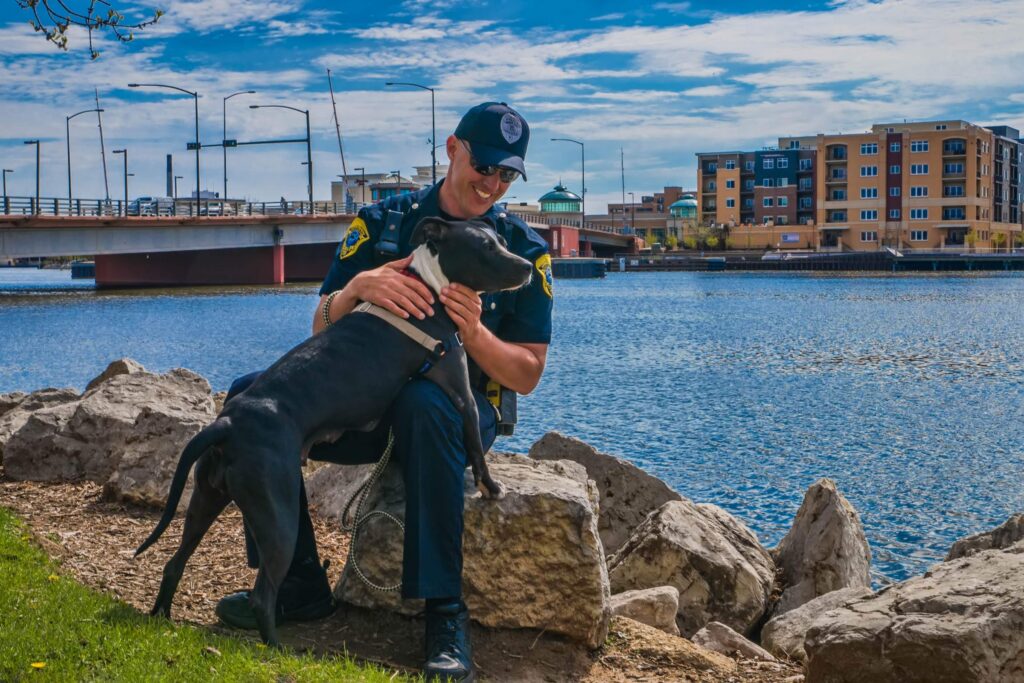
Public safety is measured in emergencies, but it is built during the hours when no emergency is happening.
A resident needs police, fire, and emergency services to respond reliably when help is required. The same city also needs relationships, training, youth contact, neighborhood communication, and prevention work that can reduce harm before a crisis.
Green Bay's 2018 State of the City reported that 2017 had the city's lowest crime rate since 1975 and zero reportable homicides. Those are historical figures from one reporting period. They are not a statement about current crime, and they do not mean every neighborhood or every resident experienced safety in the same way.
The same address described several efforts intended to connect public-safety agencies with the community. The examples included a Youth Coordinator, Police Explorers, Books and Badges, summer basketball, Hispanic community outreach, and Safe Parks. It also identified Police Foundation support for mounted patrol and implicit-bias training.
The value of that record is the combination. The city reported an outcome statistic and also described relationship-based work around it.
Statistics can identify change across a city, but they do not explain every cause. Crime levels are influenced by many conditions, agencies, people, and events. It would be inaccurate to attribute a citywide rate to one program or one elected official.
Community programs also should not be treated as substitutes for emergency response or investigation. Their role is different. A youth program creates contact before a young person meets an officer during a crisis. Neighborhood outreach helps residents communicate concerns. Training can improve how employees recognize and respond to situations. Public events give residents and officers ways to know one another outside enforcement.
During my administration, I viewed public safety as work that required both capacity and connection. That meant supporting the departments responsible for response while also recognizing the partnerships that help a city understand problems earlier.
The credit belongs broadly. Police officers, firefighters, dispatchers, emergency personnel, civilian employees, neighborhood leaders, schools, youth organizations, nonprofits, families, and residents all shaped the conditions reported in 2017. Council members and city staff made budget and program decisions. The mayor's office was one part of that structure.
The limitations belong in the record as well. A favorable annual statistic does not erase individual victims, unresolved cases, unequal experiences, or future challenges. It is one piece of evidence from a particular year.
What the 2018 address documents is a city reporting a historically low crime rate while investing in youth contact, community outreach, training, and neighborhood presence. Those activities did not all do the same job, but they reflected a shared understanding that response and trust are connected parts of public safety.
That is the historical record. Any claim about Green Bay today requires current data and current community evidence.
Why this still matters
A city earns safety by responding when people need help and investing in the relationships that prevent problems.