From Jim's Story
September 29, 2026
The Roller Coaster That Almost Cost Me an Election
The Zippin Pippin was a political risk during a downturn. It also became a lasting vote of confidence in Bay Beach and Green Bay families.
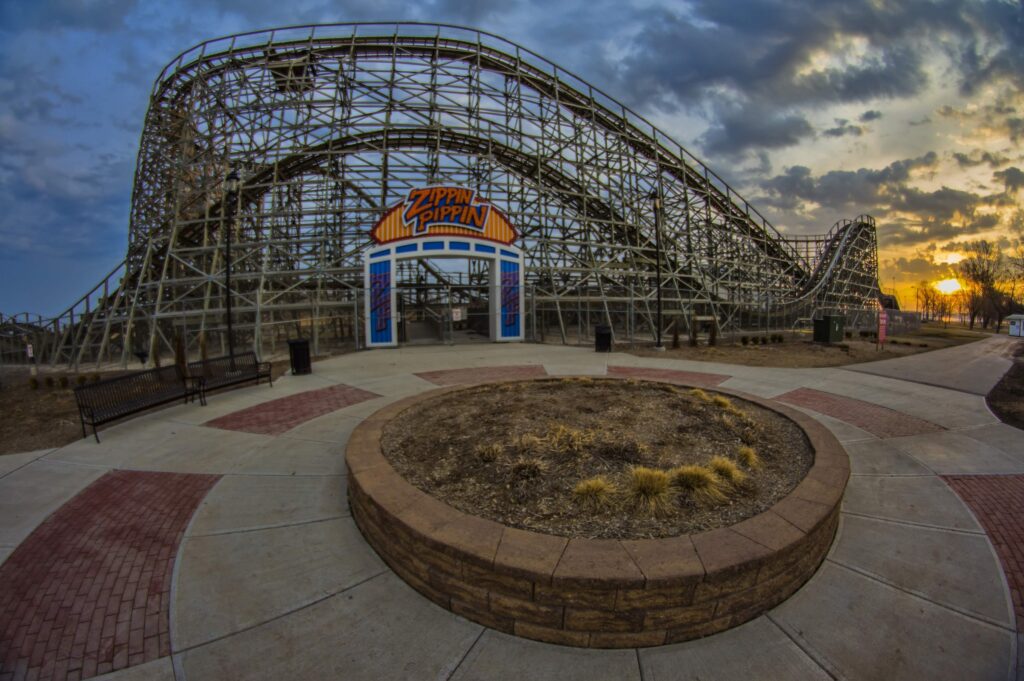
The Zippin Pippin almost cost me an election.
Green Bay was still dealing with the effects of a national economic downturn. Families were watching their bills. Businesses were uncertain. Local governments were under pressure to explain every public dollar.
And Green Bay was building a multimillion-dollar wooden roller coaster.
It was an easy project to attack. Critics questioned whether a roller coaster belonged anywhere near the top of the city's priorities. They doubted that Bay Beach could attract enough riders to make the financing work. During the 2011 mayoral campaign, the project became shorthand for a larger question about my judgment.
I understood the skepticism. Public officials should expect hard questions when they support a major investment, especially during a difficult economy. A memorable idea is not automatically a responsible one. It needs a purpose, a financing plan, and a way to measure whether it worked.
Bay Beach supplied the purpose.
For generations, the park had given Green Bay families an affordable place to spend time together. It was public, local, and woven into the city's identity. But the park needed a major attraction that could bring families back, draw visitors, and support the rest of the rides and concessions without giving up what made Bay Beach accessible.
The Zippin Pippin also brought a remarkable history. The original wooden coaster had operated at Libertyland in Memphis and was widely associated with Elvis Presley. After Libertyland closed, the coaster deteriorated. Green Bay did not simply move an old wooden structure north. The city acquired the name and design, preserved original cars for display, and rebuilt the ride in Green Bay with new materials.
That work belonged to a team. City staff, council members, park employees, engineers, builders, and supporters all had to solve practical problems. Construction crews worked through a Wisconsin winter. The design included steep curves, and some of the nails securing the rails were too large for an air gun, so workers drove them by hand. The project had to open on schedule and perform safely.
The financial benchmark was straightforward. The ride needed 200,000 riders a year at one dollar per ride to cover the bond payment. Critics said Bay Beach would not reach the number.
The Zippin Pippin recorded 452,000 riders in its first season.
In June 2013, it carried its one-millionth Green Bay rider, reaching that milestone three years ahead of city projections. A University of Wisconsin-Green Bay performance report also found that overall Bay Beach revenue increased nearly 56 percent from 2010 to 2011, the year the coaster opened. That park-level increase reflected more than one ride, but it showed the broader momentum Bay Beach gained during the same period.
Numbers do not answer every question about a public decision, but they matter. We had stated the ridership target before the result was known. The public could compare the promise with the performance. That is the kind of accountability a major project should have.
The lesson was not that every politically risky idea is secretly brilliant. Many risky ideas are simply bad ideas. The lesson was that political safety and public value are not always the same thing. Leaders have to examine the evidence, define the expected return, listen to criticism, and decide whether the community will be better served over time.
If the decision is yes, they also have to accept responsibility. They cannot take sole credit when a project succeeds or disappear when it struggles. The Zippin Pippin worked because a large group of people turned a controversial proposal into a safe, popular attraction and because Green Bay families embraced it.
What looked like an unnecessary risk during the recession became a lasting vote of confidence in Bay Beach. It gave families another reason to spend a day together at an affordable city park. It brought new attention to an institution Green Bay already loved. It showed that public investment can respect tradition while giving it new life.
Sometimes the best decision is also the easiest one to explain during an election. This was not one of those decisions.
It was still worth taking the ride.
Why this still matters
Good leadership accepts scrutiny, makes a careful decision under uncertainty, and remains accountable for the result.