From Jim's Story
August 16, 2026
Turning Green Bay Back Toward the River
CityDeck was built on a simple belief: Green Bay's riverfront should be a place where people can gather, not just a place people pass by.
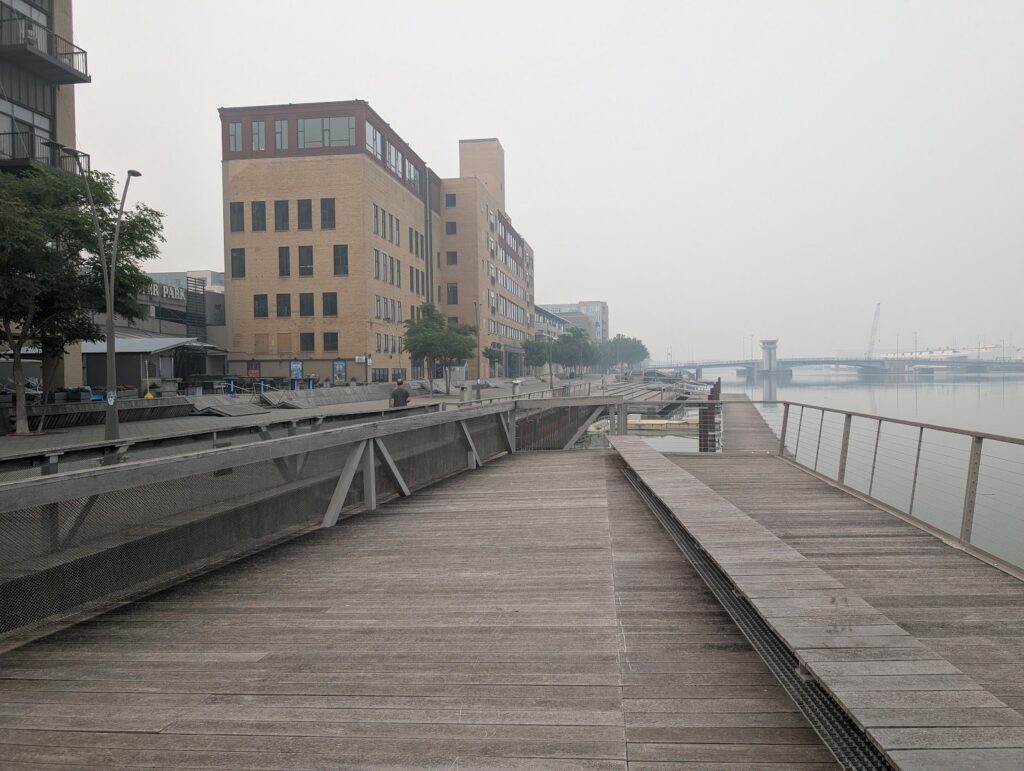
For a long time, Green Bay had its back to the Fox River.
The river was always there. It carried our history, our industry, and our future. But too much of downtown treated it as something to look past. You could drive by it, cross it, or work near it. What we did not have was a place that invited families, neighbors, visitors, and workers to come down to the water and stay awhile.
That is what CityDeck set out to change.
I did not see it as a boardwalk project. I saw it as a decision about what kind of downtown Green Bay wanted to have. We could continue to think of the riverfront as a leftover space between buildings and traffic. Or we could make it a front door to the city: public, active, and welcoming to anyone who wanted to use it.
That was not a decision City Hall made alone. Designers, city staff, business owners, community partners, elected officials, and residents all had a hand in it. A project like CityDeck needs people who understand engineering, people who understand public space, and people willing to keep asking whether the finished place will actually work for the families who use it.
There were practical questions at every stage. How do we make a riverfront strong enough to handle Wisconsin weather? How do we make it safe without making it feel closed off? How do we build something that is useful on an ordinary Tuesday afternoon, not just for a special event?
Those questions mattered because public space has to earn its place. It has to invite a parent with a stroller, a teenager meeting friends, a worker on lunch break, an older resident out for a walk, and a visitor seeing Green Bay for the first time. It has to feel like it belongs to the whole city.
CityDeck did not create Green Bay’s waterfront by itself. The river, the neighborhoods, the businesses, and the people who kept showing up did that. But it gave the city a place to come together beside the water. It made the riverfront a destination instead of a boundary.
It also demonstrated something important about downtown work. You do not revive a city center by waiting for activity to appear on its own. You make a place where activity has a reason to happen. You create room for a small event and for an unplanned conversation. You make the public realm as important as the buildings around it.
CityDeck became part of a larger civic effort, alongside neighborhood work, local businesses, arts, events, and private investment. It should be understood that way. The project did not replace the work of anyone else. It gave that work a shared setting.
That is why I kept supporting the work. A city grows stronger when it creates places that bring people together without asking them to buy a ticket or belong to a particular group. Public space is one of the ways a community tells its residents: this is yours, too.
Today, when I see people walking the riverfront, attending an event, sitting outside, or bringing their children down to the water, I do not think first about concrete or construction. I think about a city that decided to turn toward one of its greatest assets.
Green Bay did not need to become somewhere else. We needed to make better use of what was already ours.
Sources and record
CityDeck project account provides public context for this account. Explore the Green Bay Record for more source-linked city work.
Why this still matters
A strong city makes shared public places that bring people together and turn local assets into everyday community life.