From Jim's Story
September 15, 2026
What we carry into public service
Every person who comes to government is carrying something we may not see. Service starts by recognizing the dignity of the person in front of us.
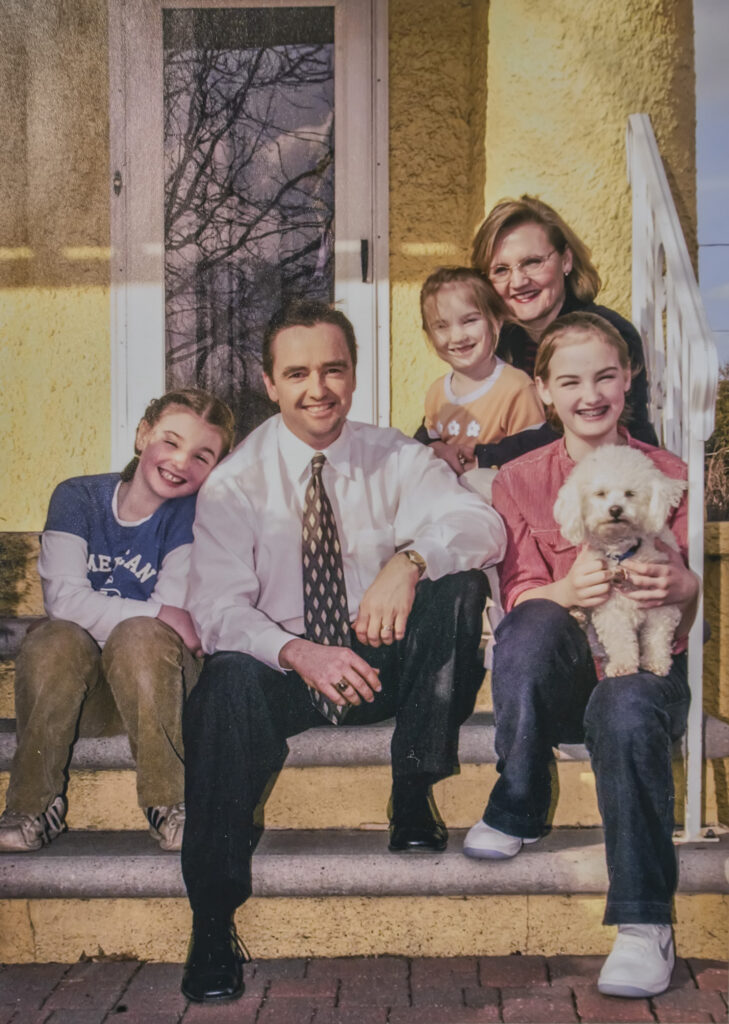
Public service is shaped by policy, budgets, and decisions. It is also shaped by what a person has lived through before walking into the room.
In February 2002, Dona and I lost our fourth daughter, Eva, when she was less than one week old.
There is no comfortable way to summarize that experience, and there is no political lesson that makes a loss like that simple. We were grieving parents. Our family was trying to understand how daily life could continue after a life so brief had changed us permanently.
We dedicated a bench to Eva in St. James Park, across from our home in Green Bay's Astor neighborhood. It gave our family a place to remember her. The park was already part of our daily life. After Eva died, it also became a place where memory had a physical home.
Eight months later, I announced my first campaign for mayor near that same park and across from Eva's bench.
I share that sequence carefully. I do not claim that grief created a political mission or that losing Eva supplied a simple reason to run. My path toward public service had been forming through years of business, neighborhood life, and experiences with local government. I had seen how a city decision could affect a small employer. I had watched development move to surrounding communities while Green Bay struggled to act on some of its own possibilities. I had reasons to step forward, and I had reasons to stay with the business and family life I knew.
Losing Eva did not settle those questions. It changed what I carried into them.
It deepened my understanding that every person who comes to government is carrying something we may not see. A resident may be dealing with grief, illness, housing insecurity, a struggling business, a child who needs help, or an aging parent. The application sitting on a desk may be one file among many to the person processing it. To the person waiting, it may determine whether the hardest week of their life becomes a little more manageable.
That does not mean government can remove every hardship. It cannot. It also does not mean rules should disappear whenever someone is hurting. Fair government requires standards that apply consistently.
But consistency does not require indifference.
Public servants can explain a process clearly. They can avoid making people repeat painful information unnecessarily. They can return a call. They can recognize when a routine delay has serious consequences for a family. They can treat a person as more than a case number while still doing the work correctly.
Those actions are ordinary, which is precisely why they matter. Residents should not have to depend on a dramatic intervention from the mayor to receive basic respect. The expectation has to be built into daily work, from the first phone call through the final decision.
My faith and family taught me that service begins with the dignity of the person in front of you. Experience taught me that dignity and competence belong together. Kind words are not enough if the work is careless. An efficient process is not enough if it treats people as obstacles. Good public service must be both humane and dependable.
That standard also changes how a leader listens. You cannot assume that the person speaking most forcefully is the only person affected. You have to make room for people who are tired, uncertain, or unfamiliar with government. You have to remember that a public meeting may feel routine to those seated at the front of the room and intimidating to someone attending for the first time.
Eva's life was brief, but she remains part of our family. Her memory is part of the perspective I bring to public service, not as a campaign device and not as an answer to every question. It is a reminder that people arrive at government with full lives, unseen burdens, and a right to be treated with care.
That is what I carry into the room.
Why this still matters
Competent government begins with the dignity of the person in front of it, including the burdens that may not be visible.