From Jim's Story
September 8, 2026
Why I started holding walking meetings
A small change in how I held meetings improved health, used time better, and brought city government closer to the streets it served.
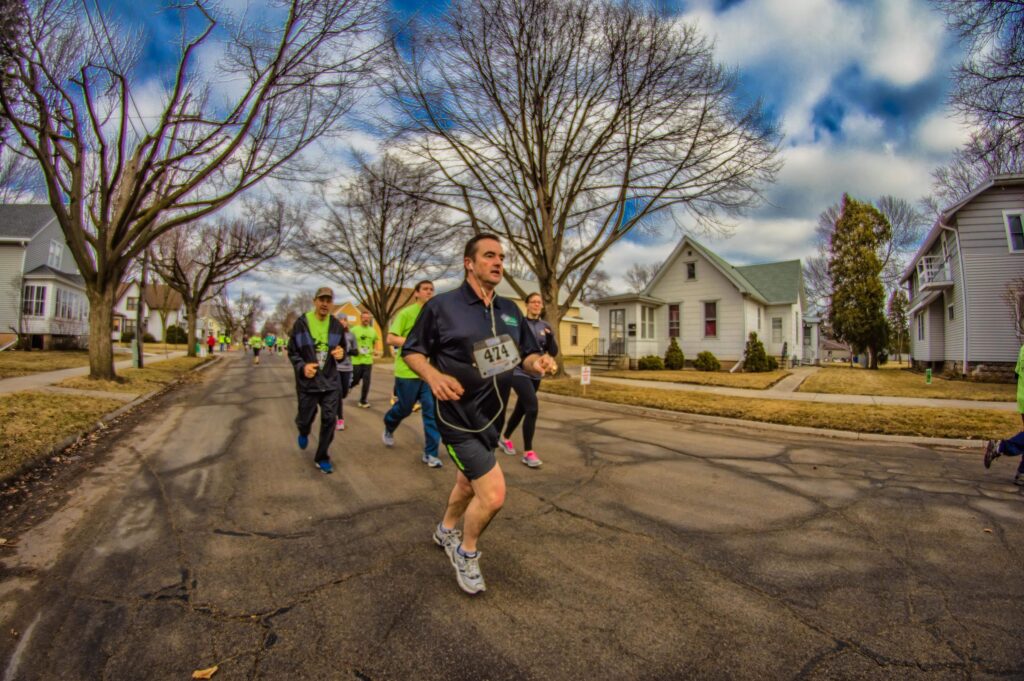
During my first term as mayor, I gained 20 pounds.
The reason was not mysterious. My calendar was packed, and many meetings happened over breakfast or lunch. A person would ask for time, and the easiest answer was often to meet over a meal. On especially crowded days, one lunch meeting could be followed by another. The conversations were important, but the routine was not healthy and it was not making the meetings any better.
So I changed the format.
When someone asked to meet, I often suggested that we walk. We could discuss the same neighborhood concern, business question, or city issue while moving through downtown, around a neighborhood, or through City Hall. The conversation was usually less formal. The time was still productive. Both of us got some exercise.
We also started a lunch-hour walking group for people working at City Hall. The building gave us a route even when Green Bay weather did not cooperate. City Hall has six stories and staircases at both ends. We would climb the stairs on one side, cross the top floor, come down the other side, and, when the weather allowed, walk outside before repeating the route. The goal was not an athletic achievement. It was 20 minutes of movement in the middle of a workday.
The change was small, but it revealed how much a workplace is shaped by routine. No ordinance was required. No new department had to be created. We simply asked whether the usual way of holding a meeting still served its purpose.
That question applies to more than exercise. A leader's calendar tells an organization what matters. If every hour is spent behind a desk or moving between formal meetings, direct observation and informal conversation get crowded out. Changing the format created room for both without adding another obligation to the day.
Walking also changed what entered the conversation.
Inside a conference room, an issue can become a paragraph on an agenda or a number in a report. Outside, you see the cracked sidewalk, the vacant storefront, the construction barrier, or the corner where traffic moves too quickly. A resident can stop you with a question. A city employee can point to something that is difficult to explain on paper. The place itself becomes part of the meeting.
That does not mean every meeting belongs on a sidewalk. Some conversations require privacy. Some require maps, financial documents, or a formal public setting. The point is not that walking solves every problem. The point is that leaders should keep testing whether a familiar routine helps them understand the work.
The same belief later became part of a broader public-health effort. By 2018, Green Bay was holding its fourth annual Move with the Mayor walks in partnership with the National Forum for Heart Disease and Stroke Prevention. The city invited residents to join weekly 1.5-mile walks beginning at City Hall. What started for me as a practical response to an unhealthy calendar became one way to encourage the wider community to move together.
I also learned that visibility is not a performance. It is a working method. A mayor who regularly moves through the city is more likely to hear what residents are discussing before it becomes a crisis. City employees see that the person responsible for decisions is willing to look at conditions directly. People who would never schedule an appointment at City Hall have a chance to speak.
The lesson has stayed with me. Local government improves when it leaves enough room for direct observation and ordinary conversation. A spreadsheet can identify a trend. A report can document a problem. Neither can replace seeing a place, listening to the people who use it, and asking the next question.
Sometimes better government begins with a large decision. Sometimes it begins by changing how a meeting is held. In this case, the return was better health, better use of time, and a closer connection to the city we were there to serve.
That remains a good return on a pair of walking shoes.
Why this still matters
Useful city leadership keeps testing whether an ordinary routine still serves people or continues only because it is familiar.