Water, Parks, and Public Life
August 17, 2026
The Zippin Pippin was a bet on Green Bay joy
The Zippin Pippin brought another family attraction to Bay Beach and a new reason to visit.
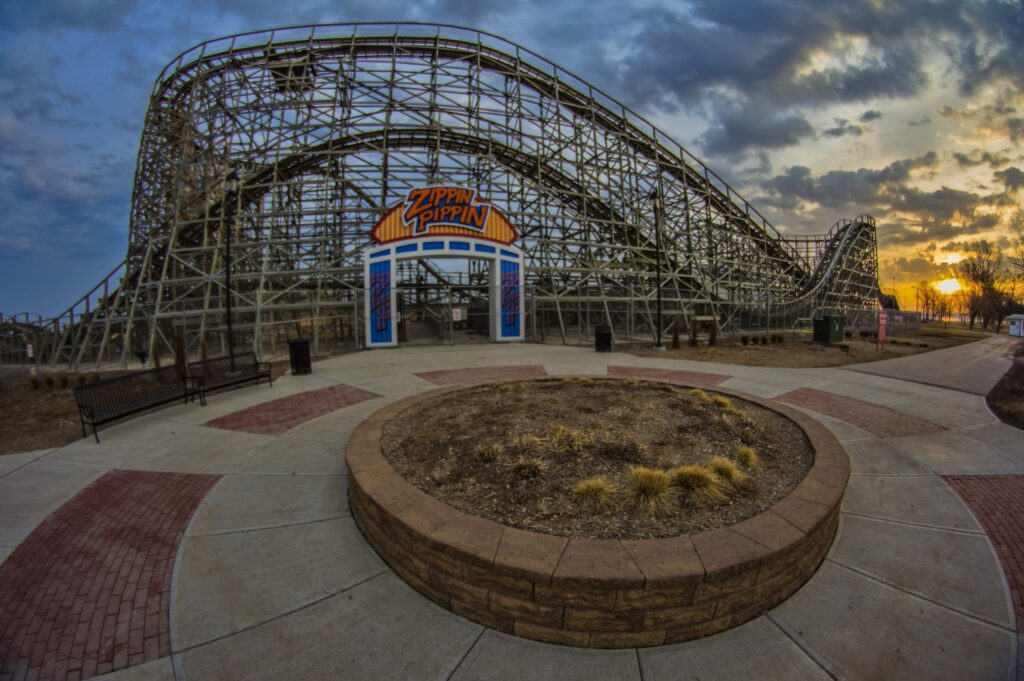
When Green Bay rebuilt the Zippin Pippin at Bay Beach, the project attracted attention for obvious reasons. The original wooden coaster had operated at Libertyland in Memphis and was associated with Elvis Presley. Green Bay was giving the ride a new home at a public amusement park on the bay.
The history made the project memorable. The public decision still had to be practical.
Bay Beach needed attractions that could keep families returning and support the broader park. At the same time, Green Bay was operating during a difficult economy. Residents had a right to ask what the ride would cost, how it would be financed, whether people would use it, and what happened if the projections were wrong.
Contemporaneous reporting identified a clear performance benchmark. The Zippin Pippin needed 200,000 riders a year at one dollar per ride to cover its bond payment. That number made the public test understandable before the result was known.
The ride recorded 452,000 riders in its first season. In June 2013, it carried its one-millionth Green Bay rider, reaching that total earlier than the city had projected. Those figures do not answer every question about the park or every public investment, but they allow the stated expectation and the actual use to be compared.
The physical work also involved more than moving an old coaster north. Green Bay acquired the name and design and preserved original cars for display, but the ride itself was rebuilt with new materials. Construction crews, engineers, inspectors, park employees, and contractors had to create and operate a safe attraction through a Wisconsin construction season.
I was a strong proponent of bringing the Zippin Pippin to Bay Beach. That position became a visible issue in the 2011 mayoral campaign, and I was accountable for supporting it. The result, however, belonged to the team that built and operated the ride and to the families who chose to use it.
That shared credit matters. A mayor can support an idea and help assemble a path, but public employees, elected bodies, technical professionals, and residents determine whether it becomes a functioning public asset.
The Zippin Pippin should also remain in proportion within Green Bay's record. It was not the city's most important responsibility, and it did not replace public safety, infrastructure, neighborhoods, or basic services. It was one documented investment inside the larger story of Bay Beach.
Its value was visible in use. The ride gave families another reason to visit an affordable public park, brought new attention to Bay Beach, and met the early ridership test reported when the project was evaluated.
That is the factual case for including it in the record: a controversial proposal had a stated benchmark, the public could measure the result, and a large team turned the idea into a heavily used attraction.
Why this still matters
Bay Beach succeeds when it gives residents and visitors another reason to spend time there.